Science | Department of Environment, Science and Innovation
Queensland science makes a difference globally with strengths across all the fields of science particularly in applying research to the real world. Queensland is an exciting place to do science.
Explore our leading research organisations and experts, the science supporting our knowledge-based industries, our international collaborations and the latest news about Queensland’s science.
Search the Queensland science capability directory
With over 280 research centres, institutes, hospitals, precincts and other research organisations, Queensland science is delivering leading research.
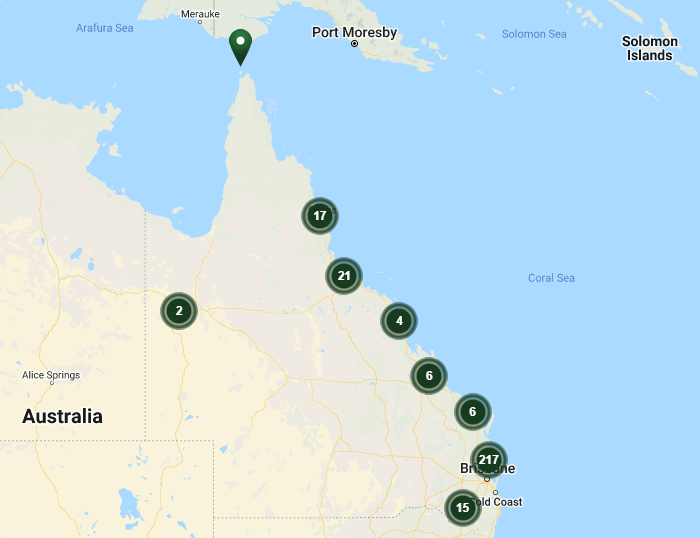
Queensland Science is addressing some of the biggest challenges the world faces—the health of our communities, and environments; the quality and quantity of food available; abundant clean energy; and sustainable economies.
Queensland Science is addressing some of the biggest challenges the world faces—the health of our communities, and environments; the quality and quantity of food available; abundant clean energy; and sustainable economies.

Explore our science across these key areas
Science for our knowledge-based industries.
Queensland science in the news
News from Queensland universities and research organisations.
-
Would you be happy as a long-term single? The answer may depend on your attachment style
Are all single people insecure? When we think about people who have been single for a long time, we may assume it’s because single people have insecurities that make it difficult for them to find a partner or maintain a relationship. But is this true? Or can long-term single people…
23 Apr 2024
Griffith University

-
Is your disaster planning old school? If it's not, you might want to consider making a change.
Is your disaster planning old school? If it's not, you might want to consider making a change. Results from a recent JCU study indicating the low-tech but trusty AM/FM radio needs to make an urgent comeback
23 Apr 2024

-
Robot designed to boost coral regeneration on the Great Barrier Reef
QUT researchers have developed a robot to count and capture images of baby tank-grown corals destined for the Great Barrier Reef. The system will help keep the corals happy and healthy before they are deployed and save researchers thousands of hours of coral counting time.
23 Apr 2024

-
Bringing new life to an ancient nut
A culturally significant Australian nut dating back to Jurassic times could have a big future thanks to UQ–led research revealing its substantial health benefits. Dr Jaqueline Moura Nadolny from UQ’s Queensland Alliance for Agriculture and Food Innovation said the bunya nut (Araucaria bidwillii) was an energy and nutrient dense bushfood…
22 Apr 2024

-
Restoring coastal habitat boosts wildlife numbers by 61% – but puzzling failures mean we can still do better
Humans love the coast. But we love it to death, so much so we’ve destroyed valuable coastal habitat – in the case of some types of habitat, most of it has gone. Pollution, coastal development, climate change and many other human impacts have degraded or destroyed swathes of mangrove forests…
20 Apr 2024
Griffith University

-
‘We have thousands of Modis’: the secret behind the BJP’s enduring success in India
Since 2014, Indian Prime Minister Narendra Modi’s popularity has grown exponentially – and so has the formidable organisational machine of his Bharatiya Janata Party (BJP). These two factors will be key to delivering the BJP a likely third consecutive victory in the Indian general election.
19 Apr 2024
Griffith University

-
Link between childhood maltreatment and adult substance abuse
UQ researchers have found people maltreated as children are 3 times more likely to be admitted to hospital for alcohol and substance use by the time they're 40, compared to people who were not maltreated.
19 Apr 2024

-
👏Congratulations to @Rossalford who has been elected as a 2023 Fellow of the @aaas in recognition of his distinguished contributions to the field of ecology
👏Congratulations to @Rossalford who has been elected as a 2023 Fellow of the @aaas in recognition of his distinguished contributions to the field of ecology, and the causes of and mitigation strategies for global declines in amphibian populations.
19 Apr 2024

-
Ecology and computer science unite to protect the environment
Saving Australia’s environment starts with understanding it. A research project using acoustics and AI shows us how. Professor Paul Roe, Head of QUT’s School of Computer Science and the Lead Researcher at the Australian Acoustics Observatory (A20) and Dr Daniella Teixeira, ecologist, and Research Fellow at QUT, are currently engaged…
18 Apr 2024





![]() Queensland – Bavaria Collaborative Research Program - Applications open
Featured
Queensland – Bavaria Collaborative Research Program - Applications open
Featured

The new Queensland-Bavaria Collaborative Research Program has opened for applications with two categories: Seed Grants and Development Grants.
![]() Queensland quantum and advanced technologies
Featured
Queensland quantum and advanced technologies
Featured

Queensland is at the forefront of quantum and advanced technology research in Australia. The Queensland Quantum and Advanced Technologies Strategy harnesses Queensland’s expertise in quantum technologies.
![]() Queensland excels in infectious disease research
Featured
Queensland excels in infectious disease research
Featured

The Queensland Infectious Disease Research Capabilities statement presents comprehensive information on how Queensland’s research community excel in infectious disease research.
![]() Queensland Government Science Strategic Investment Framework
Featured
Queensland Government Science Strategic Investment Framework
Featured

Find out more about how the Queensland Government is investing in scientific excellence and capability through a range of programs and initiatives.
![]() New Queensland Cancer Centre to be built
Featured
New Queensland Cancer Centre to be built
Featured

A new world class stand-alone Queensland Cancer Centre is to be built within the Herston Health Precinct. It will be the only cancer care service in Australia offering the full spectrum of cancer services in…
![]() $80m vaccine manufacturing facility to be built in Brisbane
Featured
$80m vaccine manufacturing facility to be built in Brisbane
Featured

The Translational Manufacturing@TRI facility equipped to scale up to full production to support late-stage clinical trials of promising drugs and vaccines is to be built next to the Translational Research Institute with $60m funding from…
![]() Strategic Visualisation Tool
Featured
Strategic Visualisation Tool
Featured

Explore our strategic visualisation tool to understand Queensland’s research strengths and capabilities in seven emerging industries…
![]() Traditional knowledge and biodiscovery resources
Featured
Traditional knowledge and biodiscovery resources
Featured

Resources have been created to support biodiscovery entities and First Nations peoples understand and comply with the traditional knowledge obligation under the Biodiscovery Act 2004.
![Lidia Morawska]() QUT’s Lidia Morawska - one of 100 most influential people in the world
Featured
QUT’s Lidia Morawska - one of 100 most influential people in the world
Featured

QUT’s Distinguished Professor Lidia Morawska, an international air quality expert, has been named in the Time Magazine as one of the 100 most influential people in the world. Professor Morawska is the director of the…